
The new Moat in Town: ENERGY
Remember when semiconductor shortages crippled auto production during the pandemic? Or how bandwidth constraints throttled the early internet?
I'm providing some insights into my research of the energy sector and how it remains a overlooked sector, yet crucial for current economic expansion. The Focus for this article is AI.
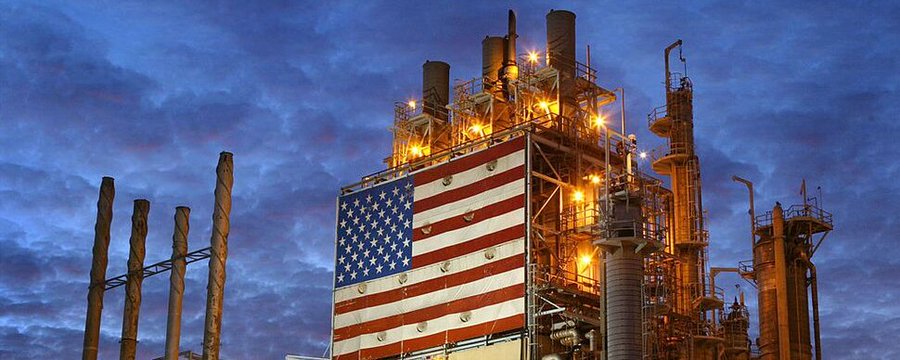
The new Moat in Town: ENERGY
Navigating the financial markets from the dot-com frenzy to the crypto craze, I've noticed plenty of bottlenecks reshape industries. Remember when semiconductor shortages crippled auto production during the pandemic? Or how bandwidth constraints throttled the early internet?
Today, in the world of artificial intelligence (AI), we're witnessing a similar pivot. For years, the race was all about securing NVIDIA's GPUs. But the real choke point has shifted upstream: to energy and power. It's a constraint that's not just technical but structural, tied to grids, regulations, and physics itself.
The Shift from Chips to Energy
AI's explosive growth is no longer limited primarily by chip supply. NVIDIA and TSMC are ramping up production, Blackwell chips are coming online, and with enough capital, backlogs can clear in 2-3 years. But powering these AI behemoths? That's a different beast, operating on 5-10-year timelines dictated by infrastructure realities.
Think of it this way: A single AI training cluster now uses 100-200 megawatts (MW) of electricity. That is enough to light up a small city!! A full hyperscale campus demands 500 MW to 1 gigawatt (GW), rivaling the output of a nuclear reactor.
The U.S. data center power draw was about 17 GW in 2022; projections peg it at 35-50 GW by 2030. That's like adding 20-35 new nuclear plants in under a decade, but building one takes 10-15 years. Hyperscalers (Mag7) pour in liquid cash ($600 billion+ in 2026 capex alone), but delivered power remains stubbornly constrained. The big players like Microsoft, Amazon, Google, and Meta are feeling the pinch. Their combined 2025 capex hits $405 billion, jumping to $600 billion in 2026, with roughly ~75% funneled into AI infra like servers, GPUs, and cooling. Yet, as CEO's like Amazon's Andy Jassy and Microsoft's Satya Nadella have lamented in earnings calls, they can build data centers faster than they can electrify them. Revenue growth in Azure AI and Google Cloud is capped not by demand, but by grid hookups and power deals. They're even leasing from third parties at premiums, bypassing ownership to sidestep delays.
Who Wins in a Power-Scarce World?
The Moats and Players potentially do! It's creating winners with MOATS that are time based. Companies that locked in power access years ago now hold irreplaceable assets.
Geography plays a starring role:
Northern Virginia: The world's largest data center hub, but "tapped out." Utility Dominion Energy has halted new large-load connections due to grid strain. Existing interconnections here are gold—non-replicable without years of upgrades.
Texas (ERCOT grid): Faster interconnections (18-36 months) and cheap generation, but volatile prices and isolation from the national grid raise reliability flags.
TeraWulf (Section 11): They repurposed a retired 700 MW coal plant in upstate New York, inheriting dual 345 kV transmission lines, water cooling, and fiber. No need to build from scratch; they just occupied stranded infrastructure.
IREN and Nebius (Sections 12-13): These GPU cloud providers own their power stacks. IREN with 4.5 GW in Texas/Oklahoma, Nebius targeting 2.5 GW by 2026 across Finland, New Jersey, Kansas City, and Iceland. It's a vertically integrated bet, but with unique risks like operational complexity.
GPU clouds like CoreWeave face dual binds: securing NVIDIA chips and data center power. Meanwhile, pure data center operators thrive by leasing to hyperscalers desperate for quick capacity. The interconnection process underscores the moat's durability.
In ERCOT, it's "fast" at 18-36 months; in PJM (Eastern U.S.), queues stretch to 2028-2029 with 2,600+ GW of backlogged projects. These aren't solvable with bigger checks. They're gated by studies, permits, and construction that can't be rushed.
Potential headwinds presented
The thesis where we rely heavily on energy avoids AI euphoria and focuses on fundamentals like infrastructure. It's a timely reminder that tech revolutions depend on boring basics like electricity. For new investors, this opens doors to undervalued plays in data centers or even utilities adapting to AI loads. If power scarcity persists, these could outperform flashy AI model makers. But let's be critical: Is the bottleneck as immutable as claimed?
The thesis leans heavily on current timelines but here are some concerns listed:
Governments could accelerate via policy tweaks: think Biden-era infrastructure bills or future incentives for green energy.
Renewables like solar/wind (with batteries) deploy faster than gas plants (3-5 years), and modular nuclear reactors (NuScale) promise shorter builds.
Hyperscalers are already inking deals with nuclear firms like Constellation Energy.
What if AI efficiency improves, reducing power needs? Models are getting smarter per watt --> Grok's chips, for instance, claim massive efficiency gains.
Regulation is another wildcard. Grid operators prioritize stability over speed, but political pressure from Big Tech could shorten queues. Projections of 35-50 GW by 2030 sound dire, but if AI hype cools (remember Web3's energy guzzlers?), demand might undershoot.
Volatility in Texas power prices could burn operators betting big there.
Environmental pushback data centers' carbon footprint is ballooning, inviting scrutiny.
That said, I'm open-minded. The math checks out: AI loads are doubling yearly, while grids evolve glacially. This could mirror the oil boom's infrastructure plays, where midstream firms (pipelines) minted fortunes amid scarcity. Watching out for stocks tied to power-secured data centers might trade at discounts until the market catches on eventually.
Conclusion of this article
In sum, this thesis reframes AI investing and looks at power instead of GPU and computing. It's a structural edge that could endure, rewarding patient players with grid access. For new investors, start small nonetheless. Research data center REITs or energy ETFs (like XLU/XDW0/..), but diversify.
Monitor hyperscaler capex and utility filings for signals. AI's future is bright, but without the juice, it's just potential energy.
As I already shared on my socials many times, I entertain the idea that oil infrastructure will see a comeback if this continues to play out. Demand for oil should go up as we increase manufacturing supporting the build out of these systems in the coming years ahead. Demand will likely improve because there are no real alternatives right now and building out alternatives takes many years. Supply is likely to increase and this provides an excellent assymmetric opportunity for those patiently waiting.
I will share more insights about Energy as we move forward as I believe the sector will be an interesting theme in the coming commodity bull run.
